Showing posts with label tea-reviews. Show all posts

Friday, March 16, 2012

An interesting home-storage green tea

Today I finally decided to try a bag of green tea that I kept in refrige for how long? FOUR years! Unbelievable. Time flies. This is a 2008 Spring 黃山毛峰 Huangshan Mao-feng, which I wrapped in a coffee bag, put into a air-tight glass jar and stored in the refrige on May 8, 2008 (according to the note I wrote on the bag). The tea still performs quite well --


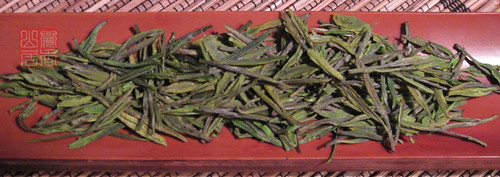
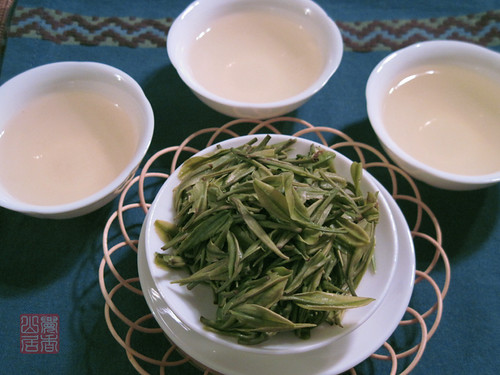
The dry leaves are still green, covered with thin tiny white hairs, and once infused in hot water, turned out a quite fresh looking. The aroma is the typical "mung bean taste" to be expected for good green tea.

 Turned out to be a real joy ;-)

Friday, December 25, 2009

A Green in the Name of White


It's been a while I have not reviewed any teas seriously... but this doesn't mean that I'm out of teas. In fact, I keep getting new teas, many of which are gifts from friends, like this one I'm trying today.


This a tea named Fuwei Bai Cha (富伟白茶) or Fuwei White Tea. The word "bai" means white. But, a look on the dry leaves revealed to me the truth that it is actually a type of green tea. And to be specific, it is a type of green tea in the category of chao qing (炒青) or "roasted green" so to speak. You may get confused for why a green tea is named white tea? To decode the "white" part in the name, we have to take a look on what it really means by "white" in the terminology of current industry as well as its historical meaning.

The terminology white used in "white tea" is ambiguous. It refers to two different entities: (1) The color of the tea leaf which is "white" or pale green, or is ivory colored (when the leaf is young) -- this is probably the original meaning; and (2) The "simplicity" in the process of the tea leaves, which means merely letting the leaves wither and then dry and pack them up.

In today's tea industry in China, among the five types of tea named by colors [1], it is in the second sense mentioned above that the White Tea is definied. An example of White Tea in this system is Bai Mu Dan (白牡丹) or White Peony.

In the ancient time (especially in Tang and Song Dynasties), White Tea is definied differently from that of the modern tea industry. It is more straight forward referring to the color of the leaves, and has nothing to do with the processing method. A tree that grow "white" colored leaves is considered a specialty. The taste of the tea made out of the white tea tree is said to be supreme [2]. In the ancient time, the procedures in tea manufactury is way more complicated than today's.

Back to today's tea. I did a small online research and found out that this tea is in one of the series of new products developed in the last couple of years, noticeably all from the west region of Lake Tai (太湖). Tea growers there claimed that they have re-discovered the ancient "White Tea", because they found a type of tea tree growing in mountains there which sprouts unique ivory colored leaves, similar to that described in ancient tea classics. And therefore, they call it "White Tea." Obviously, this naming has a great marketing purpose!

However, the tea is processed in the method of green tea. Therefore, by definition of modern tea industry, this type of tea is still a green tea. One of the most polular products in this series which has made a big marketing success is Anji White Tea (安吉白茶).

A search for the manufacturing location of this particular product I'm reviewing today results in a neiborhood of the Anji White!


In conculsion, we have been dealing with three types of "white tea" so far
  1. White Tea in the ancient sense: a special type of tea tree that grows white leaves. In Song Dynasty, teas are manufactured into tea cakes, and grinding the cake into tea powder is required before it can be consumed.

  2. White Tea in modern Chinese tea industry: tea leaves are picked and let withered simply by itself (without shaking or twisting as that in the process of Yellow or Oolong teas) and dried (under the sun or by heating); light fermantation occurs during the process of withering.

  3. A type of green tea called "white" in name only! Picked from a special type of tea tree that grows white leaves, processed in the manner of green tea, which means zero fermantation!


Now comes the actual review part....

The tea is well processed, the package looks nice, too. The dry leaves are flat in shape -- could be a major difference from Anji White which are not flat. The color is also more greenish in comparison of Anji's dull green. I made four infusions, the first one is done in the manner of throwing leave onto hot water (上投), which means you first pour boiling hot water into the gaiwan, and then throw the leave onto the water and let them slowly infused into the water. This is the way often employed for green teas of tender leaves. I used 4g of dry leaves to suit my 120cc gaiwan.


The taste is pretty decent as for a good green tea. It presented a little astringency which you will not experience with Anji White. Usually, astringency indicates the tea possesses less amino acid but more poly phenols. To me this is a good news, because more poly phenols means more EGCGs or the antioxidant element.

The spent leaves demonstrate the tea's specialty for which it is named: the pale greenish with a tone of ivory!


Notes

[1] The five types of tea are: Green Tea, White Tea, Yellow Tea, Oolong Tea (or Greenish Black), Black Tea.
[2] The supreme quality of White Tea is described in a Song Dynasty Tea Classic 《大觀茶論》.

Sunday, July 20, 2008

5 Oolong Teas (2): Dahongpao

As Bill mentioned in his comment on my last post, there was a confusion whether the container marked by him as "1980's Dahongpao" is indeed a Dahongpao, or not?! "When I had placed the tea in the container, I was abrubtly taken away to attend to another matter. As a consquence, I forgot what I had given you!" Uh uh...

But, is this a problem? Not for me. My strategy is to test this tea with a benchmark, a real Dahongpao that I bought at Malian-dao, the biggest Tea shopping center in Beijing, last summer!

COMPARING THE DRY LEAVES


(1980's dry leaves)


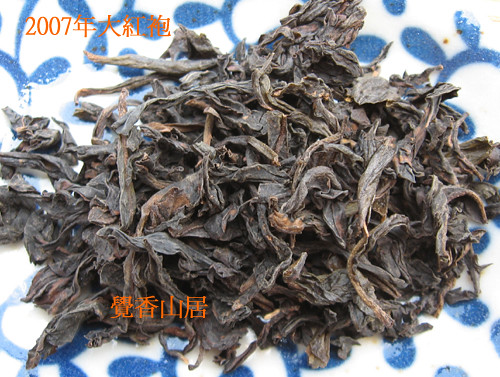
(2007's dry leaves)

Smelling
Yes, it is very important to smell the dry leaves -- this will reveal a lot of information: How the tea is processed and stored; where it came from; and together with the shape of the leaves it often tells what the tea IS! My Dahongpao releases a rather strong tosted and pleasant aroma; Bill's is much lighter, which made me think that it must have gone through a long period of dry storage; but my nose still tells me that this is not a Dancong or a Oolong from any other region. It is of Wuyi. The leaves of these two tea also bear quite a lot of similiarities.

STEEPING & SLURPING

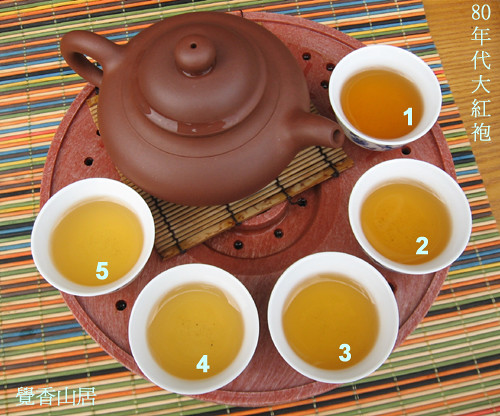
(1980's infusions 1 to 5)


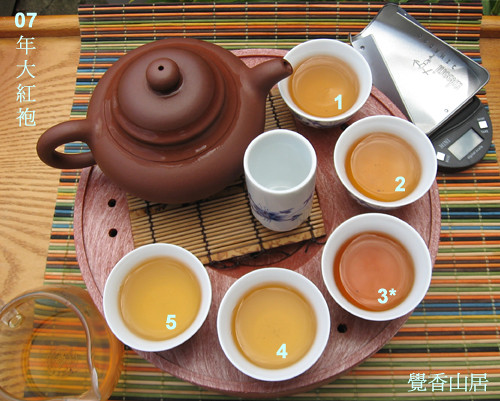
(2007's infusions 1 to 5)

The 1980'S
There is a saying "天下茶喝膩了還有武夷巖茶" or "if one is sated with teas he can still resort to Wuyi Rock Tea"! The beginning of the 1980's infusion was pleasant, though I could sense a slight oxidization taste in the liquor. It is a kind of stopping-ness on the tongue, especially on the upper part and two sides. Also, the color of the liquor went out gradually but noticeable. Upto the 5th infusion, the color became much lighter than the first three infusions. [Comments] A good and aged Wuyi Rock Tea. It won't last many infusions, before the drinker is getting satiated with his tea!

The 2007's
I wasn't as much paying attention to the tea as in the test of the 1980's. At the 3rd round, I was distracted by something else and when I returned, the liquor already became quite dark! And as a consequence, I guess, the 2007's got exhausted quickly after that as well... The tea tasted no sign of oxidization, just its spent leaves could tell below. [Comments] A good beginner's Wuyi Rock Tea.

COMPARING THE SPENT LEAVES

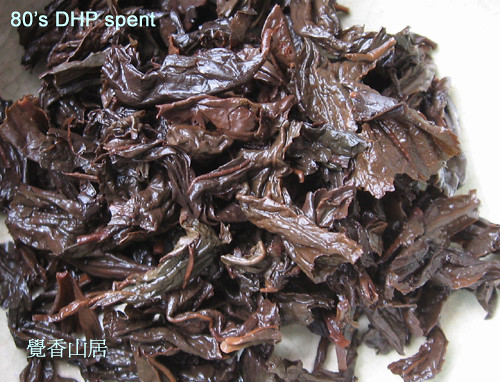
(The spent leaves of the 1980's from Bill)


(The spent leaves of my 2007 Dahong Pao)

Many leaves are still greenish in the 2007's; in contrast with the 1980's complety aged look ---

Wednesday, July 16, 2008

5 Oolong teas (1): Feng-huang Dan-cong

A Chinese version is posted on 覺香山居.

Bill, the author of Ancient Tea Horse Road, sent me five Oolong tea samples. They are
  • 1980's [Wuyi Cliff] Da-hong-pao

  • 1983 Anxi [? not appeared to be Tie-guan-yin]

  • 1986 Feng-huang Dan-cong

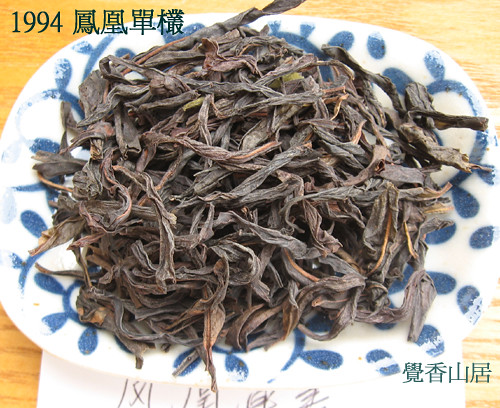
  • 1994 Feng-huang Dan-cong

  • 1980's Taiwan Paochoung

There are two things noticeble here. First, these five teas have included representatives of all 4 oolong tea producing regions, namely, North Min, South Min, Guangdong, and Taiwan; secondarily, they are all aged oolong teas dated back to 15 or 20 years. Having realized these, I was very impressed by Bill, as an American tea drinker, for the depth of his tea knowledge and experiences.


regionsNorth MinSouth MinGuangdongTaiwan
representativesWuyi Da-hong-paoAnxi Tie-guan-yinFeng-huang Dan-congPaochoung

Also based on these understanding, I decided to start the reviewing process by first grouping them into pairs. The first round would be, of course, for the two aged Feng-huang Dan-cong! This was done in last weekend.

[Method] Gai-wan
  • White porcelain gai-wan, thin-walled, 100cc

  • Glass pitcher (to decant the infusion in whole)

  • White porcelain cups paired w/ wen-xiang cup

  • Stainless kattle and electric single burner

  • Amount of dry leaves used: 3.6g

  • Water: when boiling, move away from burner and stand alone for a few seconds

  • Pouring the water in a slow circling motion along the inside rim of the gai-wan; at the last second, raising the kettle a bit higher and pouring straight to one side of the wall so that the leaves can be rolled in water (for better infusion)

  • Awaking the tea leaves at the beginning by pouring boiling water into gai-wan, then immediately empty it.


I. 1994 FENG-HUANG DAN-CONG

Dry leaves: Impressive, entire and long twist (3-4cm); dark purple-brown with white frost-like appearance. Some still has a tint of green.

1st infusion: Decant after 1.5 minutes. Red-brown with tint of orange.

2nd infusion: Color darkened. Taste slightly astringent. The astringency was felt especially at the back of tongue and its touch with the back teeth.

3rd - 4th infusions: The tea behaved quite ordinary... but

In the 5th infusion it started to taste better. There can be two reasons: (1) I waited longer for this infusion; (2) the tea might require a longer period to awake, and it was just about the time at the 5th infusion. This pleasant moment, however, went on to only one more infusion, and after that, the leaves seemed exhausted...

[Comments] This Dancong has a subtle floral aroma, though I could not identify which category it belongs to. It is said that there are at least 8 types of Dancong according to different fragrances, but obviously I'm too less experienced to distinguish! --- I need more Dan-cong. Did you all hear me? ;-)


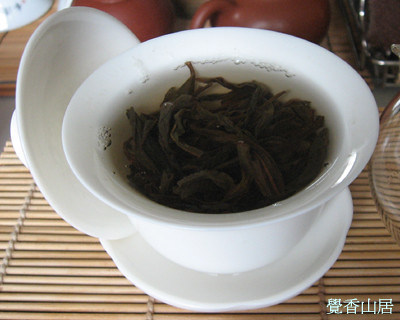
(1994 Dancong, 1st infusion)


(3rd infusion)


(spent leaves)


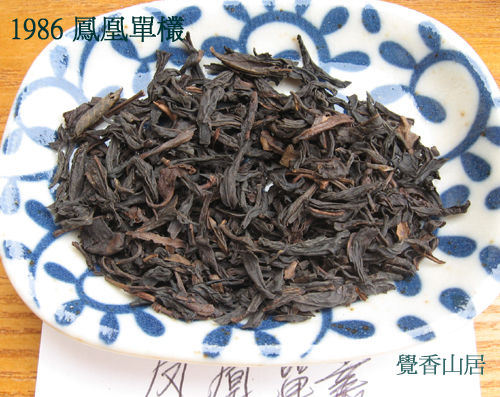
II. 1986 FENG-HUANG DAN-CONG

Dry leaves: Long and thinner twist (3 cm), a little broken. Dark purple-chocolate color with some brown leaves.

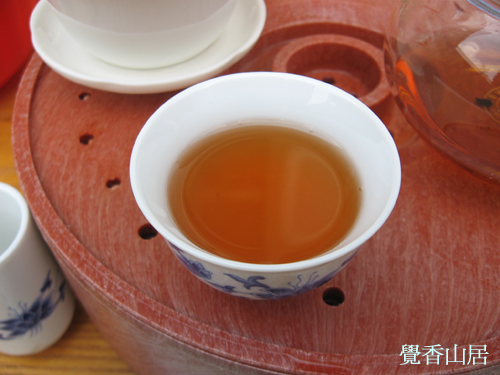
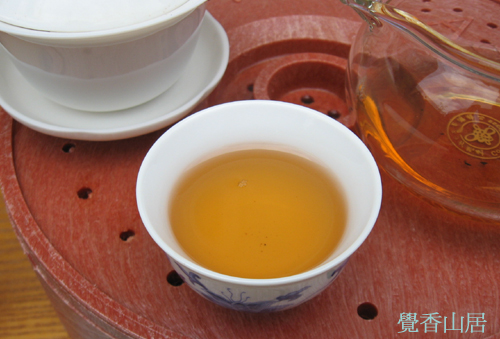
Infusions: When the hot water just poured in, the leaves immediately released a kind of dark orange to red color. The taste of the first infusion reiminded me with heavy-fried Tie guanyin or Dong Ding. So, for a moment, I doubted that a mistake was made on the label. However, the coming infusions proved the tea not a member of either Anxi (Southern Min) or Taiwan groups.

This well aged tea went on for quite a few infusions -- I kept pouring and decanting and forgot how many infusions I actually went through. The color of liquor lasted as well as the taste of the tea. These were mostly done with rather quick decantations, though. I did extend the infusion time once, and interestingly, the tea tasted a little bitter at that time, I remembered. In general, the taste is much more smooth or subdued than that of the 1994's.

The review on the 1994s was done indoor at my tea table. For the 1986's, I moved out to the patio to enjoy the evening breeze...


(1986 Dancong, 2nd infusion)


(at about the 6th infusion)

Having poured down so many cups of aged oolongs, I felt a little dizzy and seriously hungery! So, I went to look for some snacks and found out this chocolate cookies the best match with a cup of aged oolong tea (considering both color and taste)!


(spent leaves of 1986 Dancong)

[Final comparison]
Though the color and liquor of the 1986's surpassed the 1994's, I personally prefer the 1994 one. I just liked the light astringency in the latter, but felt the 1986's a bit too smooth. Both no doubt are good aged Dan-cong. -- I feel lucky because (don't know why) Bill doubled the amount of the 1994 Feng-huang Dan-cong in his samples, so there is still quite a bit of it left! I will certainly bottom them up later ;-)

Wednesday, July 2, 2008

洛杉磯-安那翰短訪(1): 比賽茶的殊勝表現

A Short Visit to Los Angeles - Anaheim (1): Tea Appreciation at Friend's Home

今年的全美圖書館協會年會在南加州安那翰(Anaheim)舉辦, 借此機會, 山人於六月底拜訪了多年法友(現在加上茶友的)L君大姐(事實上是借住在L姐家). 承蒙L的全面照顧, 山人得以在短短的四天時間和忙碌的會議日程空隙做了很多值得記憶的事 -- 按照時間/博文先後順序:
  • 與L君大姐一起品茶

  • 吃L君親自燒的菜, 觀賞L君的花園

  • 游帕薩迪那老城, 吃了有名的壽司六

  • 參訪西來寺

  • 逛小東京並在千羽鶴進午餐

  • 逛比華利山莊名店街

  • 逛小台北

等等... 這幾日將陸續寫成日志並與大家共享. 今天就先從在家中品茶開始吧!

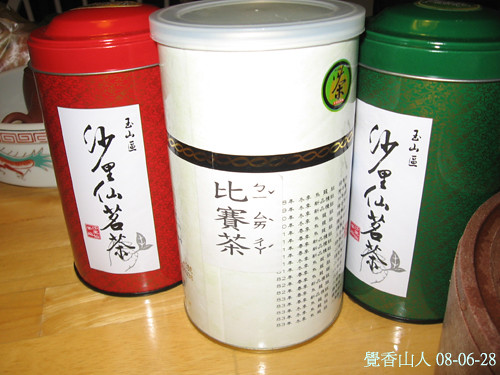
我這次雖然為L帶去一些普洱茶, 但她卻更熱衷於讓我試品她最近新買到的本年度幾款特級台灣茗茶, 包括大禹嶺春茶、梨山福壽春茶和沙里仙比賽茶. 我們分別於28和29日晚試品了這些茶. 其中特別值得一提的就是沙里仙比賽茶的不一般的表現.


記述之前, 有必要透露一下的是, 前此五月時L君曾托台灣茶葉直銷店的好友購到小批量大禹嶺、梨山及沙里仙金萱, 寄到後發現是冬茶(春茶五月採摘, 六月底才會有貨). 當時曾寄贈山人一些分享. 山人試品後(見相關博文)覺得這幾款茶已經很不錯, 況且如大禹一類優質高山茶因產地海拔高於2500公尺以上, 每年只有春冬兩次採摘, 因此所謂冬茶並不像台地茶園那樣被視為遜色, 有時反會有更佳表現. 但L君因為堅持要春茶, 竟將餘下未開封茶如數退還 -- 這令那位好友在向不做零售的茶場老板退貨時頗感尷尬 -- 於是這次再寄來的茶, 不僅保證為春茶, 而且質量有加, 自不待言... 而這款比賽茶呢, 據L說是她硬從好友那裡"索要"來的, 因為只有這一罐了!

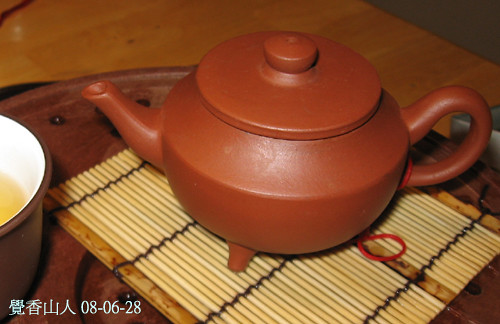
書歸正傳. 我選用了L君藏壺中的一把鼎足平蓋鳳流朱泥壺(不記得何款)試泡此款比賽茶. 約150毫升壺中投茶7克. 開水略置數秒即沿壺沿低沖而入. 茶湯黃綠色, 微苦澀, 對舌的刺激並不十分明顯, 但其最大特點乃是強有力的茶氣氣感! 嚥下後頓覺茶氣在體中有上下運行的動勢, 片刻能感茶氣上行至眉間. 這在一般台灣高山烏龍茶類中是不多見的. 第四泡後茶湯轉甘甜.


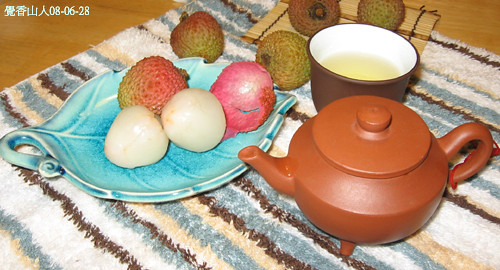
洛杉磯到底是物流中心的大城市, L在超市買到微核荔枝, 非常新鮮, 內皮粉紅色, 果肉如潤澤的白玉, 其味甘甜多汁 -- 用以佐茶, 實乃一大享受!


七泡後葉底情況:

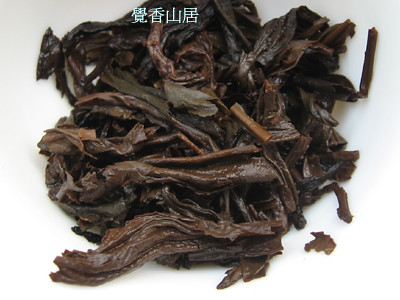
葉與梗均較冬茶為柔嫩, 但很飽滿, 可見頂芽.

Thursday, April 17, 2008

春日山居迎新茶之三: 08明前獅峰龍井二法品鑑

Originally posted at 覺香山居

--- 前試雙且先生所贈今年春摘黃山毛峰, 今再試Louisa贈明前獅峰龍井. 計劃用法式玻璃咖啡壓杯及(冷月贈)白瓷薄胎蓋碗兩種方法同時試泡, 以期比較觀察.

陳文華編著之《中華茶文化基礎知識》一書中說:
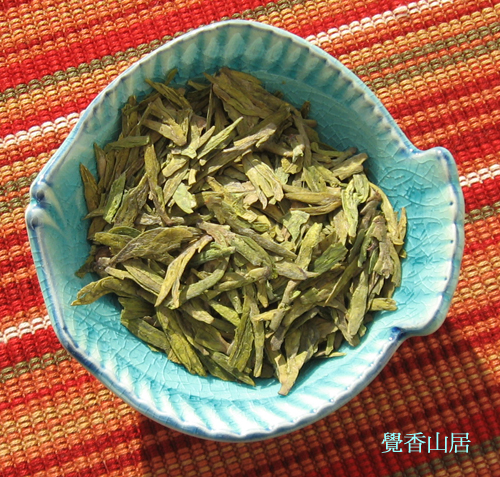
西湖龍井--產於浙江省杭州市西湖西南龍井村四周的獅峰山梅家塢等地, 故名西湖龍井茶. ...有獅龍梅三個品類. 其中以獅峰龍井最佳. 其色綠中顯黃, 呈糙米色, 香氣高銳持久, 滋味鮮醇.

今此款茶, 據Louisa講, 是上月由她在國內一航空公司朋友帶為訂購, 來源當為可靠. 先出示第三泡蓋碗湯葉亮麗可愛之狀以享各位眼目:


【乾葉觀察】此茶片薄完整. 色黃綠間嫩綠. 嗅之香氣醇厚. 捻之乾脆. 入口咀嚼, 脆香苦澀, 漸化舌上, 微起涼意, 生津明顯.


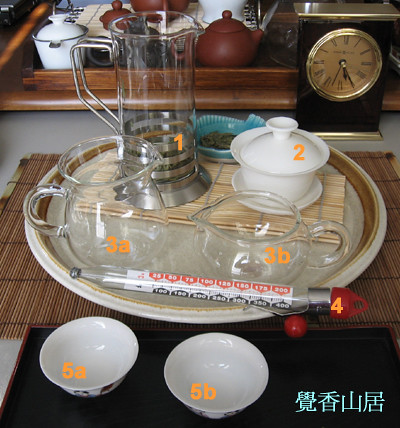
【茶具準備】


1-法式玻璃咖啡壓杯(入水300cc); 2-白瓷蓋碗(100cc); 3a-b-玻璃公道杯二; 4-試水溫度計; 5a-b-品茗杯(約30cc)二.

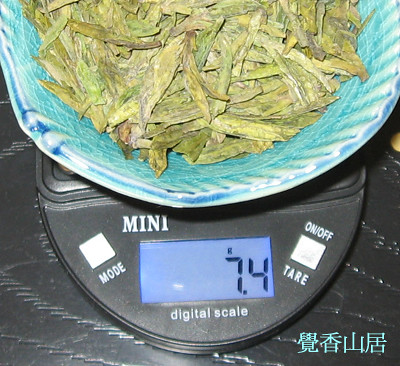
【投茶量】
A. 法式玻璃咖啡壓杯入水300cc - 投茶7.4克
B. 100cc蓋碗 - 投茶4克


【品鑑過程】
1A. 法式玻璃咖啡壓杯一泡情形:


1B. 蓋碗一泡情形:


2. 二泡比較:


3. 三泡比較:


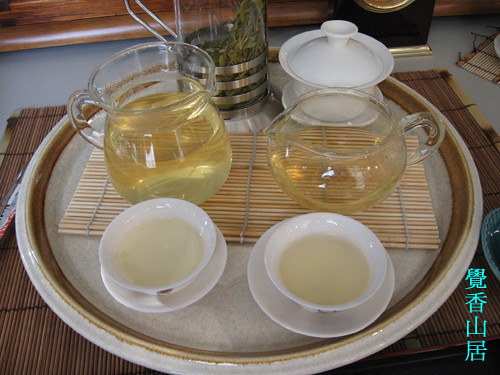
4. 三泡後葉底(上下依次為玻璃咖啡壓杯及蓋碗泡法所得). 皆一槍一旗, 圓潤飽滿:


【品鑑感受】
可以八個字概括之曰:

清 - 冽 - 香 - 醇 - 澀 - 苦 - 甘 - 涼

【二法比較】
玻璃杯泡者味較清冽, 蓋碗泡者味較醇厚; 就湯質言, 蓋碗泡者較更飽滿. 此外, 蓋碗發香較玻璃杯為更好. 但玻璃杯出湯保持溫度時間長, 而蓋碗泡者茶湯溫度降低速度快, 這也許與水量少有關?

飲三泡已, 夕陽西下, 編圖片寫網志畢, 復吟[清]張日熙《採茶歌》曰:

江南愁思盈芳草 採茶歌裡春光老
春自催歸茶自香 筠籃無那紅塵道
生小兒家龍井山 峰前峰後好煙鬟
清明寒食絲絲雨 素腕玲瓏只自攀
東家採早新月白 西家採遲梅雨碧
遲早年來活計諳 嫩芽收向筠籠密
布裙紅出儉梳妝 茶事將登桑事忙
玉腕薰爐香茗洌 可憐不是採茶娘

--- 山人一詠而三嘆之. 噫~ 好茶人生, 一品足矣!

春日山居迎春茶之二: 黃山毛峰08春摘有機茶試品

Originally posted at 覺香山居

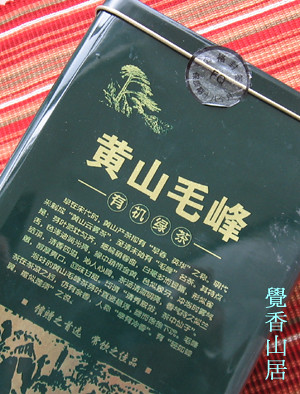
昨周六下午五時許山居先行小型茶會, 與部分茶友分享新茶新器, 席間談興應酬, 未及記錄, 今日早起天色方陰, 午後一時許片刻轉晴, 山人小寐已, 沐浴更衣, 佛前燃燈焚香, 備具安坐, 再試且飲且讀所贈2008年春摘黃山毛峰!


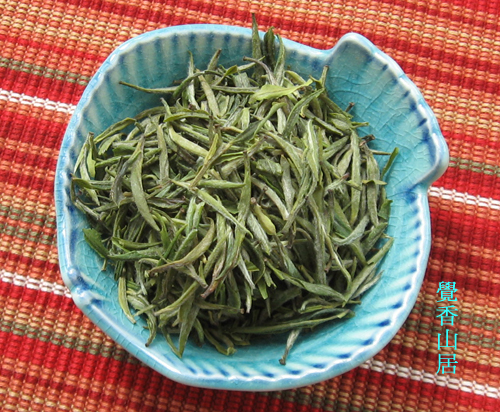
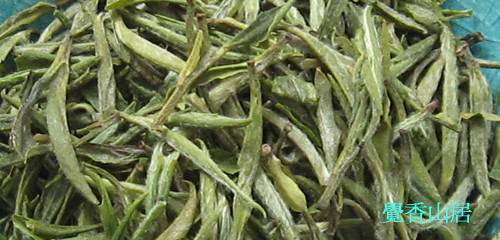
此款毛峰有機綠茶, 封才撕開, 頓見細毫於袋中騰起; 置乾茶碟上觀察, 芽頭挺秀, 其色嫩綠, 漫披白毫. 捻芽一朵入口咀嚼, 乾爽鬆脆, 初微苦, 繼而澀且甜, 嚥之無礙!


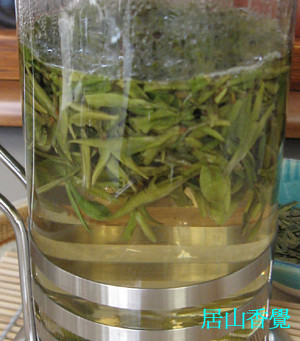
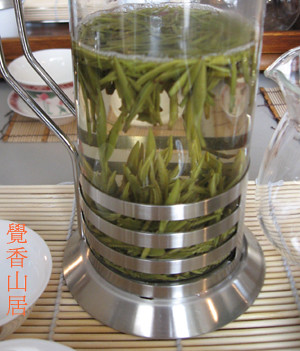
昨茶會中先試下投法, 見水沖下而葉隨浮起, 久不下沉; 故今特再試中投法, 用法式玻璃咖啡壓杯, 水燒開取下候至90餘度, 注入杯中至三分之一, 投茶5.9克, 持杯微盪之, 再沿杯壁注湯至200cc. 初泡約1分鍾出湯, 二泡延至2.5分鍾, 三泡更延至4分鍾出湯. 初泡時但見芽葉先浮水面, 杯頂水霧凝聚, 結水珠於杯壁. 稍頃, 芽漸直立, 逐一緩緩下沉...


二泡葉芽部分懸浮, 部分沉落


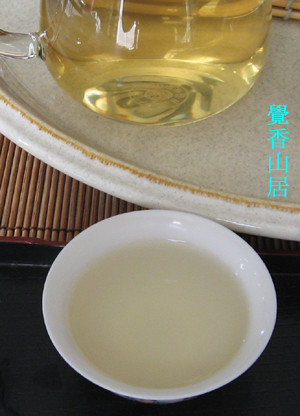
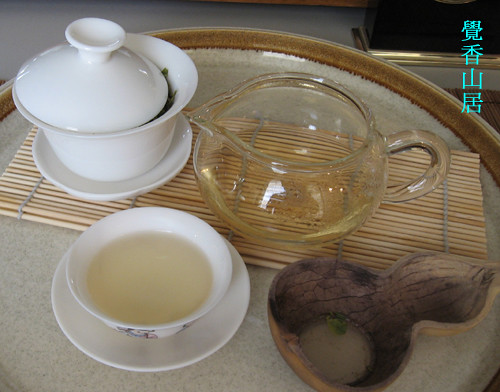
初泡湯色味清淡, 入口略澀, 杯內葉嗅之有蘭花清香; 二泡三泡皆甘醇, 香氣持久; 三泡延時出湯, 色略轉深. 此初至三泡湯色:


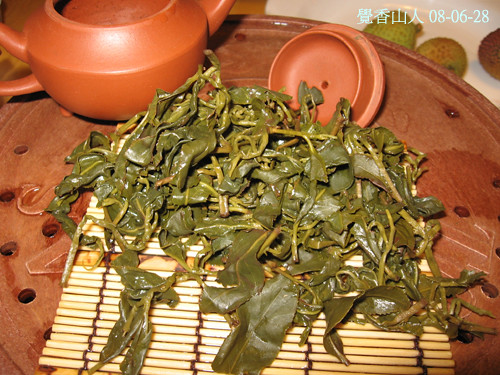
三泡後觀葉底, 芽頭完整, 光澤瑩潤, 色淺綠泛黃, 確現象牙質感.


三泡飲已開始寫博, 中間再嘗前三泡冷湯, 仍有餘香. 但四泡因忘記及時出湯, 致使茶味轉變, 口感反不及初三泡冷湯, 不可不記.

茶事記已, 更思友情. 且飲且讀先生, 余博友也, 然尚未某面, 唯以文交心耳. 知先生教書育人, 春風桃李, 且文思通貫古今, 旁徵博引, 精辟獨到, 讀者無不感佩. 茲妄借古人詩一首以酬友恩. 廣陵王逢源《謝張和仲惠寶雲茶》詩曰:

故人有意真憐我 靈荈封題寄篳門
與療文園消渴病 還招楚客獨醒魂
烹來似帶吳雲腳 摘處應無谷雨痕
果肯同嘗竹林下 寒泉猶有惠山存

Saturday, April 5, 2008

3 Combats with XGZF old cake

~ACKNOWLEDGMENT ~

I'd like to thank Mr Cloudstea for commenting my last article and guiding me with his expertise in puerh tea collection which could lead a reasonable judgement for this cake with a year of early 1990s.

Mr Cloudstea has also kindly posted his comments directly on my blog on Sina. However, due to that the comment contains urls pointing to blog entries on Blogger, not unexpectedly, it was removed by the Sina system! Nevertheless, I was able to catch a screenshot showing a headline of the comment still showing on the left "new comments" panel -- see image below! As you can see, Mr Cloudstea's name (in Chinese) was still appearing on the top of the list, but you couldn't find the actual comment under the article. And after an hour or so, even this trace was gone...


I have tried the cake - three times in a raw! The following is a review of this old intractable cake, known as 下關中茶牌繁體字七子餅 (XGZF) or Xia-Guan Zhong-cha Trade Mark with label printed in Traditional Chinese characters (this is a mirror of the article posted on my blog on Sina).

前文說到山人最近得加州洛杉磯友Louisa贈半塊下關中茶牌繁體字七子餅. 本週末, 山人連試此餅三次. 體驗頗為有趣, 特總結記錄並分享之. 首先要說明的是, 茶好不好是次要的, 觀察試驗與經驗學習更重要. 何況試茶之中, 人為主觀及茶自身等等變量眾多, 實難定性, 但也正因此而使每次試茶成為有趣之事也.

經三次開泡試茶 -- 最後一次得小刀在QQ上即時指點 -- 觀察結果是:
  • 此茶為典型港倉(尚非嚴重濕倉)

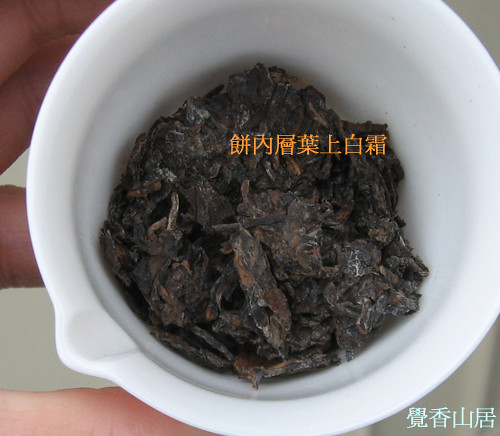
  • 茶餅發生霉變 -- 掰開後發現內層也有白霜, 局部嚴重

  • 推斷後期保存不好(Louisa述此餅一直置於塑膠袋中!)或退倉失敗

  • 湯色靚麗透明、顏色誘人

  • 六泡尚有明顯倉味(最後轉成類似中藥味)

  • 葉底柔軟有彈性, 揉壓不成泥, 纖維較挺實

處理方法:
  • 敲開置陶罐中--也許明年再試吧哈哈...

【初戰】告北

週六晚山居茶會上泡第二種茶時山人即試此茶. 因到會客多達12人, 用450cc大壺(山人之香雪海), 投入30g乾茶, 結果發現此茶用大壺很難調伏, 倉味嚴重. 出茶稍怠, 或泡間等水開時間稍延, 即致湯味重不可飲. 來客多無普洱茶經驗者, 皆不喜歡. 只有一廣州茶友說可以接受, 言第三泡時得回甘. 因此匆匆收起.

【二戰】知性

第二天一早, 山人早餐後獨自再次試泡. 這次用150cc朱泥小西施壺. 投茶7.5g. 洗茶三次. 開水取下待三次呼吸, 緩低入壺. 第一至三泡, 10秒以內出湯.

感評
  • 湯質尚飽滿, 不滑, 較苦澀, 回甘不明顯

  • 舌中後兩側及上牙床內側澀感明顯

  • 入喉無大阻力, 不鎖喉

  • 倉味嚴重(也許就是所謂樟香?)

  • 湯色深橙紅色亮麗 -- 湯色誘人但(山人感覺)不太好喝!

  • 飲後有口乾舌燥感

  • 耐泡

【三戰】得「木蘭」軍師指點

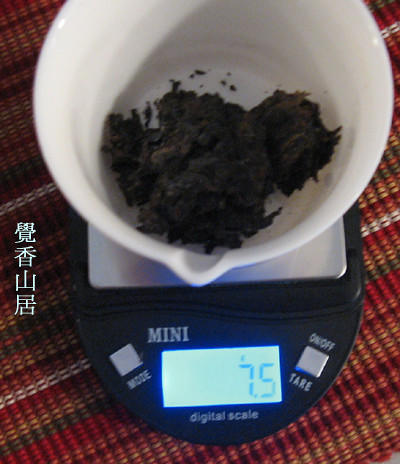
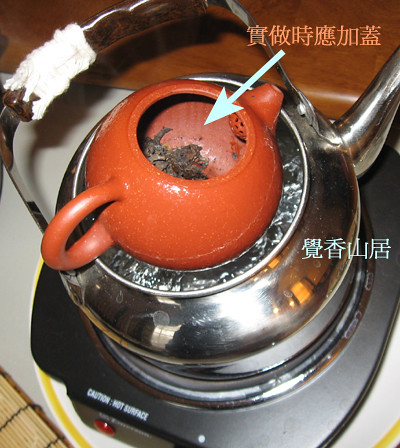
這時電腦上開著的QQ群視窗「唧唧」聲響, 視之乃小刀、且飲上來也! 聊數句, 山人述此茶之狀. 小刀立刻建議「乾茶隔壺水蒸法」, 即將乾茶投壺中, 加蓋(不加水), 放(開蓋)燒水壺上蒸, 蒸一會兒就開蓋搖動, 嗅之檢查異味情況. 如是反復進行. 待異味消除, 茶味出時即止. 小刀要求山人即試此法, 並說想看是否能改善. 於是山人洗壺燒水, 重整旗鼓. 又掰下7.5g, 這次遇到局部霉變較嚴重之處(見下圖片). 真所謂霜重色愈濃!


先照上法蒸了半天, 發現異味非一時可減輕. 不過此非方法問題, 實此餅倉味過重且發生霉變所致. 但經此幾番蒸炙, 還是多多少少去掉了一些異味, 此至第四泡時即見效果.

感評
  • 第一至三泡倉味仍重.

  • 第四泡有所減輕. 變成(山人感覺)可以接受的中藥味!

  • 第五六泡湯色略轉淡, 略有回甘.

  • 葉底如上所述(見圖)

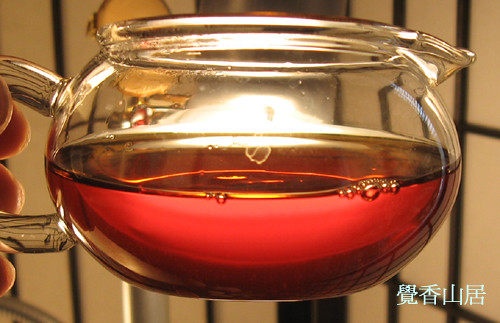
一至六泡湯色


三洗六泡後葉底


燈影湯色


小刀還提了幾項【泡老茶的注意事項】
  • 注水時要沿壺邊注入, 可多半入壺內, 小半淋壺外, 保持壺溫

  • 水滿加蓋5秒後出湯

  • 出湯時要用(最好非金屬)茶濾, 並沿茶濾外沿, 緩緩轉圈式倒入公道杯中, 目的在於使茶湯與空氣多接觸, 可令湯味甜

【評感表現不佳其他原因】

不適應入倉老茶, 因此對霉味敏感; 就像老外看到我們吃皮蛋津津有味, 眼睛會瞪圓! -- 此等"過期"霉變之物怎能吃得???

【小刀提問】
  • 用沖老茶之法對嗎?

  • 口不乾的原因是什麼? -- 怎麼來的怎麼消失的?

  • 喉部的堵塞感消失了嗎?

請各博友踴躍解答!

此時已是北美東部時間近正午一時許 -- 小刀國內時間午夜了!